Clarify Damages Before Mediation (It’s Essential)
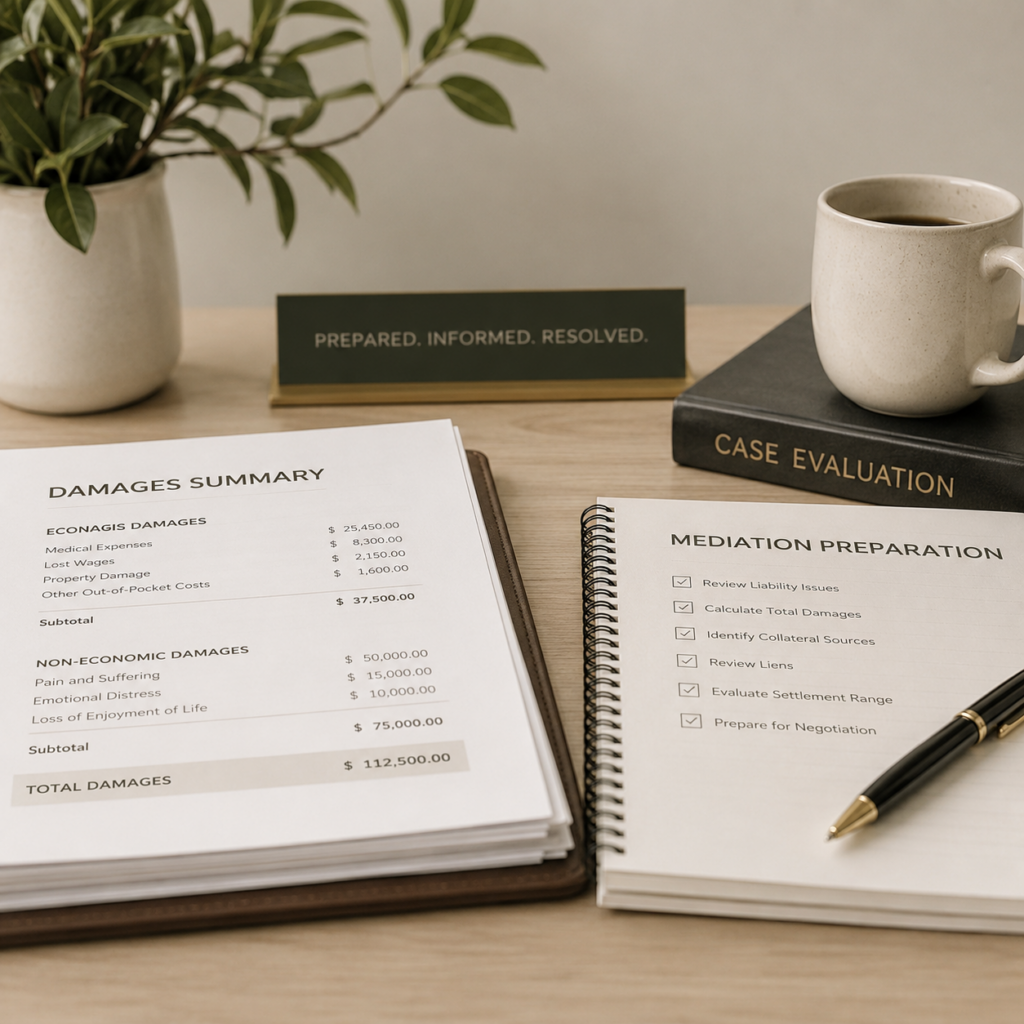
It may seem obvious, but before attending mediation, the parties should have a clear and thorough understanding of the damages being asserted in the underlying lawsuit. That doesn’t mean all sides to the dispute will agree as to the overall amount of damages that ultimately can be presented to the jury. But, each side should ascertain the amount based on available information long before the day of the mediation.
Why This Matters
The purpose of mediation is to have a meaningful opportunity to resolve a dispute without having to go to trial either before a judge or a jury. There are many factors involved in mediation and of course there can be a psychological component. For some parties, litigation is a very emotional experience which is something that cannot be overlooked. I have attended mediations where personal injury plaintiffs were more focused on receiving an apology from a defendant, than they were receiving money. For others, it is all about money. For some defendants, they may want their day in court and fear that any resolution at mediation could be construed as an admission of fault despite all conditions for mediation. Hence why there can undoubtedly be arguments over liability in many cases, regardless of the nature of the lawsuit.
Bottom line, there are many things you cannot control. So, parties should try to control the things they can control ahead of time and damages is a good place to start. If you are a plaintiff in a personal injury case, for instance, know the total medical expenses that may be presented at trial. That includes not only bills submitted by healthcare providers, but also the availability and potential effect of collateral sources—such as insurance benefits—that could reduce (or otherwise change) the net damages at issue. Know the amount of liens being asserted in advance. Defendants should also try to ascertain these amounts and both sides should know what the other is claiming.
Identifying this in advance places the case in a better posture for resolution even if there is disagreement as to the amount.
What Happens When Damages Are Incomplete
I’ve attended mediations where critical information related to damages wasn’t fully available by the mediation date. When key damages details are missing, settlement discussions often become significantly more difficult because the parties can’t properly evaluate the case or engage in informed negotiation.
In many matters—especially those involving businesses with insurance—there may be multiple decision makers with authority over settlement. If the business representative attending mediation doesn’t receive the relevant damages information until the day of the mediation, he or she may have trouble obtaining any additional authority needed to resolve the case. Having a full picture of the damages makes for a better evaluation of the case from all sides.
How to Avoid These Issues
This obstacle is often preventable. Regardless of the case type—personal injury, contract dispute, or employment matter—everyone should at least understand and appreciate what the other parties contend the potential damages may be. That way, mediation doesn’t turn into time-consuming, costly arguments over numbers, and the parties can focus on productive settlement progress.